
Fans turn GTA’s gaps into new experiences
Mods, 3D printing, and San Andreas’ legacy show a community that does not wait passively for the next GTA.
Redação G6 World
Recent projects around GTA point to a community that no longer merely waits for whatever Rockstar chooses to provide. When fans encounter a missing interaction, a technical limitation, or an expensive item, some of them try to build an alternative. Reports from PC Gamer, IGN, Rock Paper Shotgun, and Eurogamer show that impulse emerging both inside the games and beyond them.
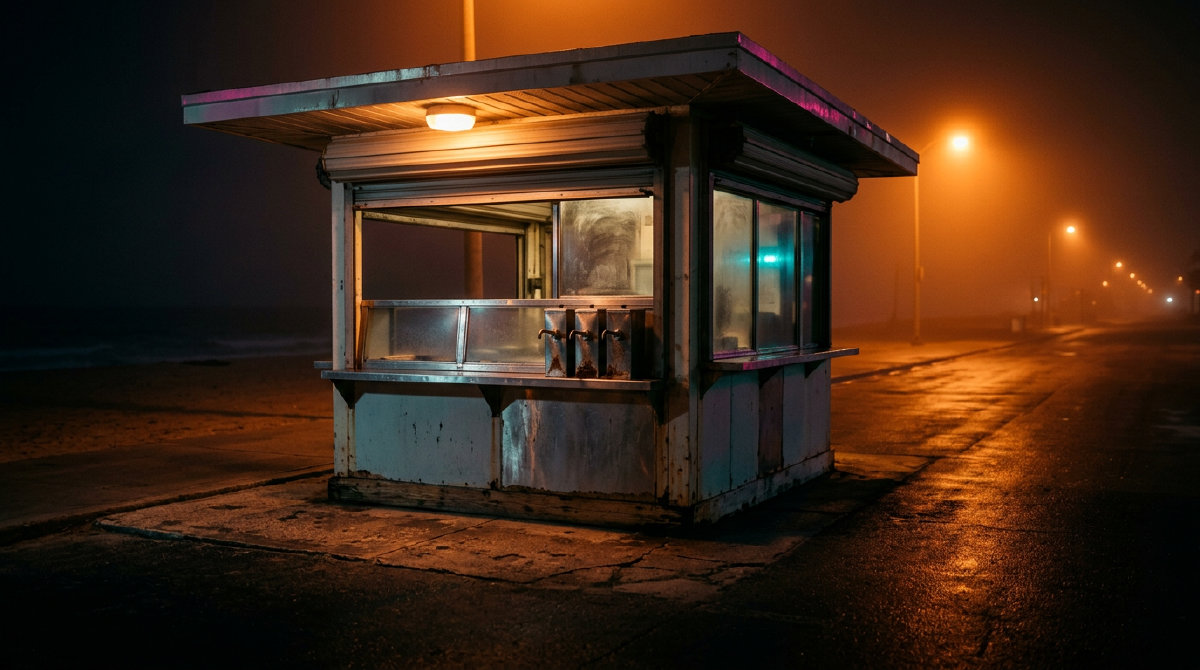
The simplest example may also be the most revealing. On September 25, 2026, PC Gamer presented a modified version of GTA 5 in which the hot dog stands on the beaches of Los Santos actually serve the player: each item costs $5 and restores health. Because GTA 4 already allowed players to buy food from vendors, the mod feels less like an extravagant transformation and more like the recovery of an everyday interaction that naturally belongs in the world.
PC Gamer says evidence suggests that a similar experience may have been planned for GTA 5, although the source does not know why it is not functional in the original game. That uncertainty matters because the mod cannot be presented as a confirmed restoration of cut content. Even so, the interest surrounding it suggests that a usable food stand can contribute more to the feeling of a living city than many elements that exist only as decoration.
Other PC Gamer experiments move in the opposite direction by deliberately disrupting the rules of Los Santos. Random Teleport Challenge sends the player to one of 28 locations every 50 seconds, while UFO Sightings generates nighttime UFO appearances at random points around the map. In the outlet’s daily series, GTA 5 operates less like a closed work and more like a durable foundation, capable of supporting both small corrections to its internal logic and ideas designed to destroy any possibility of planning.
That willingness to intervene also extends to older games. According to Rock Paper Shotgun, the DLSS IV mod adds DLSS, DLAA, and FSR 3 to GTA 4, along with HDR compatibility, without trying to replace textures or rebuild the entire lighting system. Its goal is to retain Liberty City’s basic appearance while reducing jagged edges and visual shimmering, although the source provides no performance testing. It represents a form of community maintenance: not remaking the game, but helping it coexist with current hardware and visual expectations.
The same logic appeared outside the screen shortly after the GTA 6 collection was unveiled on September 24. Eurogamer reported that the Goodtime State Vice City box costs £349 and does not include the game, while IGN cited a $400 price and highlighted Macca, the collection’s alligator mascot. A fan modeled the mascot for 3D printing and allowed interested users to support the project by paying whatever they wanted. IGN did not directly compare the replica’s quality with the official piece, but the alternative removes the need to buy the entire package solely to obtain that particular object.
IGN’s retrospective on GTA San Andreas helps explain why this behavior finds such fertile ground in the series. Revisiting the 2004 game, the outlet argued that its major achievement was not merely a map containing three large cities, but the density of its systems and possibilities. According to the retrospective, San Andreas finished that year as its best-selling game despite competing in a period that included Half-Life 2, Halo 2, and Metal Gear Solid 3. For many fans, GTA is therefore not simply a setting to cross, but a collection of things that should respond to the player’s presence.
Read together, these cases reveal a kind of curation performed by the community. The working vendor identifies an interaction that seems to belong in the world; the graphics mod decides that GTA 4’s visual identity deserves preservation; the Macca print separates a desired object from an expensive box; and the chaotic mods test how much GTA 5 can endure before it stops making sense. No single project speaks for every fan, but each turns a preference into something other people can use.
This also changes the relationship between waiting and participation. PC Gamer’s joking attempt to turn GTA 5 into a kind of GTA 6 for PC does not create the next game, but it keeps Los Santos operating as a laboratory while attention shifts toward Vice City. Likewise, printing Macca does not replace the official collection, but it allows one item to circulate through a different model of pricing and production. The audience does not control GTA, yet it is no longer completely dependent on the package defined by its creator when deciding how to engage with the series.
The strongest argument against this reading is that these examples may represent very small niches. Mods depend on the PC versions of GTA, the source does not establish the quality of the printed replica, and the power of the official product remains clear: Microsoft told IGN that it was very pleased with GTA 6 preorders and said the game was breaking records on Xbox. The company provided no absolute figures, but said Xbox’s share of reservations matched its share of the console market. Most players may simply buy and play what Rockstar delivers without ever seeking a community-made alternative.
The clearest signal to watch will be the longevity of these initiatives once GTA 6 moves beyond anticipation and offers systems that can be examined directly. If mods and physical projects continue emerging to activate interactions, preserve older experiences, or separate desired objects from larger packages, the case for a cocreative community will become stronger. If that interest disappears as soon as the new game becomes available, today’s examples will look more like temporary ways of managing the wait. It will also be worth watching whether future official information emphasizes small everyday interactions, precisely the kind of detail that made the working hot dog vendor compelling.
Rockstar still defines GTA’s official worlds, characters, and products, but fans help determine what continues to circulate after that initial definition. Sometimes the response is a technical update; elsewhere, it becomes a $5 virtual meal, an absurd teleport, or an alligator manufactured at home. That ability to turn desire into a project is one reason every GTA can remain active far beyond the boundaries of its original content.
Related
GTA 6 turns advertising into collectibles
The GTA 6 campaign is not merely presenting the game: it is producing objects and experiences that act as souvenirs of a launch yet to happen. Scarcity, spectacle and demand are turning proximity to the campaign into a form of collecting.
November will test GTA 6's cultural reach
Steven Adams and the Rainbow Six Siege team expect a temporary impact when GTA 6 arrives. If their predictions materialize in November and fade in December, the release will offer a rare measure of GTA's strength beyond its own community.
GTA 6 Makes Live Games Plan for Player Absence
Rainbow Six Siege expects to lose players temporarily, while US time-off requests point to an unusual concentration of attention on November 19. Together, the signals suggest live games may need to manage GTA 6 as a scheduled absence rather than a conventional competitor.