
GTA separates playable rebellion from real intrusion
Missions, mods, drones, and fake reviews show why GTA transgression works best when rules and consent still exist.
Redação G6 World
GTA's rebellion works because the game establishes where it begins, what consequences it creates, and when an attempt ends. Recent reports suggest that some of the anticipation surrounding GTA 6 is crossing that boundary, turning curiosity into interference with places and people that never agreed to join the game. Read together, GTA: London 1961, a GTA 5 camera mod, drones outside offices, fabricated reviews, and a Miami Beach negotiation show that the decisive element is not transgression but consent.
Rebellion constructed by the game
PC Gamer revisited GTA: London 1961 and found an extreme example of how the series originally controlled disorder through punishing rules. The free expansion, distributed online in the summer of 1999, inherited limited lives, score-based progression, and multipliers from the first Grand Theft Auto. Its timers were so tight that a wrong route or serious collision could end an attempt. Players were free to create chaos, but that freedom existed inside a structure that charged them for every mistake.
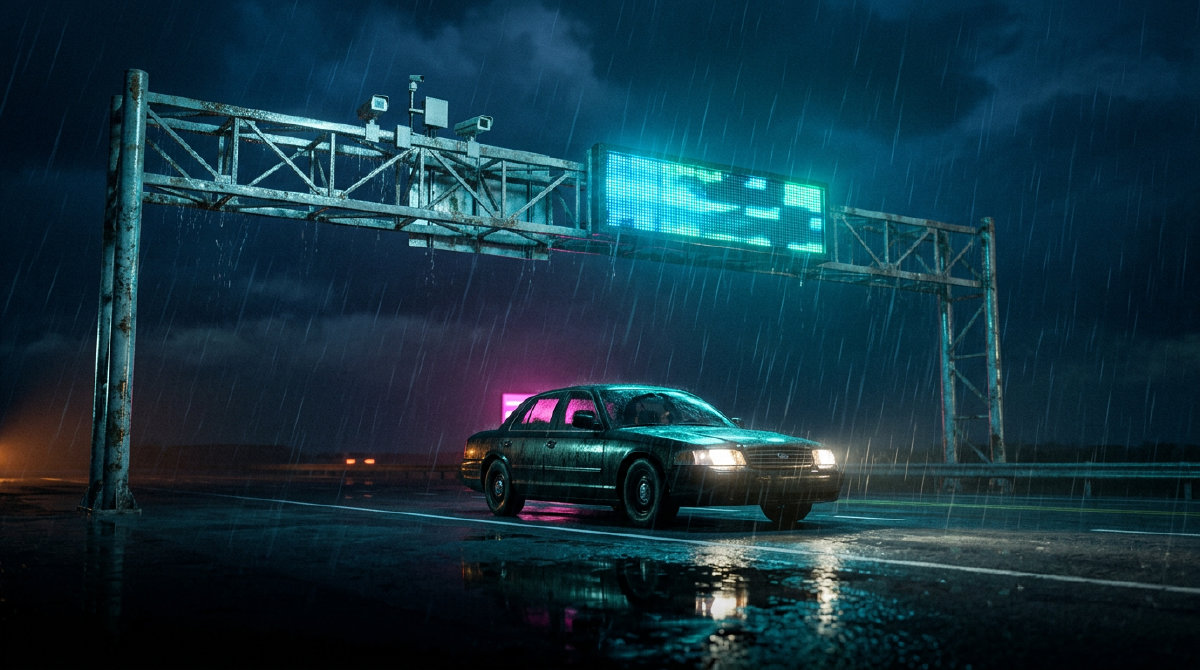
The GTALPR mod brings the same relationship between transgression and consequence to a much more modern Los Santos. According to PC Gamer, Morry's project installs 235 license plate reader cameras that can photograph a vehicle and report the player's location to the police, sometimes even when no law has been broken. Every camera can be destroyed with guns, vehicles, or tanks, turning surveillance into a system with reactions and counterplay. The appeal is not simply breaking a camera but knowing that the virtual world recognizes that choice and responds to it.
These two examples are separated by more than two decades, yet they share a fundamental idea. London 1961 uses timers, lives, and scores to limit action, while GTALPR uses surveillance, police alerts, and destructible equipment. In both cases, players know they have entered a space designed to receive their interference. Even punishment is part of an agreement accepted when the session begins.
When the target never agreed to participate
The Cypress Cove Nudist Resort episode shows what happens when that logic is carried into a real location. The Kissimmee, Florida, business said in a Google response that it received a coordinated series of fabricated reviews referencing GTA 6 after fans decided the resort might have inspired a setting. Rockstar has not confirmed any connection between the property and the game, and Cypress Cove said the posts did not represent genuine guest experiences. Unlike a GTALPR camera, the resort's business page was not created as a target for a collective game mechanic.
The difference becomes even clearer in the security measures Rockstar described during a Glasgow employment tribunal hearing. According to statements reproduced by GameSpot, crediting IGN, drones attempting to photograph the inside of an office led the company to install privacy film on its windows. Rockstar also cited restrictions on photography, external storage devices, and remote work, alongside a team of five investigators and a director assigned to potential leaks. This is not a programmed police chase in Los Santos; these are tangible changes to a development environment prompted by outside attempts to obtain information.
Miami Beach provides the most useful contrast because its connection with GTA 6 is being pursued through negotiation. According to Eurogamer, the city commission voted 4–3 to open talks with Rockstar about placing campaign elements on beach chairs and umbrellas operated by Boucher Brothers. The proposal under discussion would use only the Roman numeral VI or the Vice City name, while Rockstar's expected payment was presented as $3 million and one commissioner estimated benefits closer to $4 million. None of this amounts to a final agreement, but it creates a process in which the city, company, and operator can establish boundaries before the space is used.
The preorder launch for the GTA 6-inspired PS5 controllers presents another authorized form of participation, although it was far from perfect. IGN reported that reservations opening on September 10 produced a queue longer than an hour on the PlayStation store, login errors, inconsistent stock, and eBay listings at nearly twice the retail price. Official demand can therefore generate frustration and opportunism as well. Even so, customers, retailers, and manufacturers are participating in a recognizable transaction, with products and conditions that can be challenged without turning unrelated third parties into pieces of the campaign.
What these cases mean together
The boundary between creative fandom and invasive behavior does not depend on whether an action feels amusing, rebellious, or consistent with GTA's spirit. It depends on whether the target agreed to enter the system and whether rules exist to manage the consequences. London 1961 accepts that players will challenge its timers; GTALPR accepts that 235 cameras will be destroyed; Miami Beach may accept a campaign after negotiating its terms. A resort receiving reviews that do not represent real stays and an office watched by drones gave no such permission.
This distinction also explains why the series can celebrate fictional crime without automatically justifying every action performed in its name. GTA turns transgression into a game language because developers define targets, responses, and possible restarts. In the real world, a fake review can affect a business's reputation, while an attempt to photograph an office can produce tighter controls on working conditions. The lack of a mission screen does not make an action more authentic; it only removes the protections that allowed rebellion to function as entertainment.
The strongest counterargument
It is fair to note that Rockstar built GTA 6 around a fictional version of Florida and maintains strict control over publicity, a combination that naturally encourages comparisons, searches, and speculation. It would also be wrong to treat fabricated reviews or drone activity as representative of the entire community, especially when millions of fans simply watch official material, discuss theories, or buy licensed products. A future Miami Beach campaign could blur the boundary between Vice City and real locations even further. The problem is therefore not looking for references or sharing the excitement, but using that curiosity to impose costs on people who never chose to join it.
What to watch next
The next concrete signals will be whether the Miami Beach agreement is completed, whether the problematic Google reviews persist, and whether Rockstar attributes further security measures to outside attempts at access. If negotiated activations expand while resorts, offices, or other locations continue to face unauthorized interference, the argument that anticipation is splitting into participation and intrusion will grow stronger. If these incidents remain isolated and official channels successfully absorb public curiosity, it will weaken. The answer will not come from another map theory, but from how fans, companies, and cities handle the boundaries surrounding it.
GTA does not need to abandon irreverence for its community to recognize those boundaries. On the contrary, London 1961 and GTALPR demonstrate that rules and consequences are precisely what make disobedience interesting rather than arbitrary. Anticipation for GTA 6 can occupy beaches, controllers, and public debate without turning every window or business page into a mission objective. Knowing where the game ends is also part of understanding why it works.
Related

GTA 6 could turn one launch into two peaks
The Twitch chief’s multiplayer forecast and the campaign linked to Spotify point to an important possibility: GTA 6 could occupy the calendar through two launch moments rather than one.
GTA preserves its past in two different ways
GTA: London 1961 returning to the headlines and ambitious GTA 5 mods reveal two different ways of keeping the series’ history in circulation.

GTA 6 Must Mark Where the Puzzle Ends
The collective search for clues is part of the anticipation for GTA 6, but artist posts, casting speculation, fabricated reviews, and drones show that not everything around the game is a puzzle piece offered to the public.