
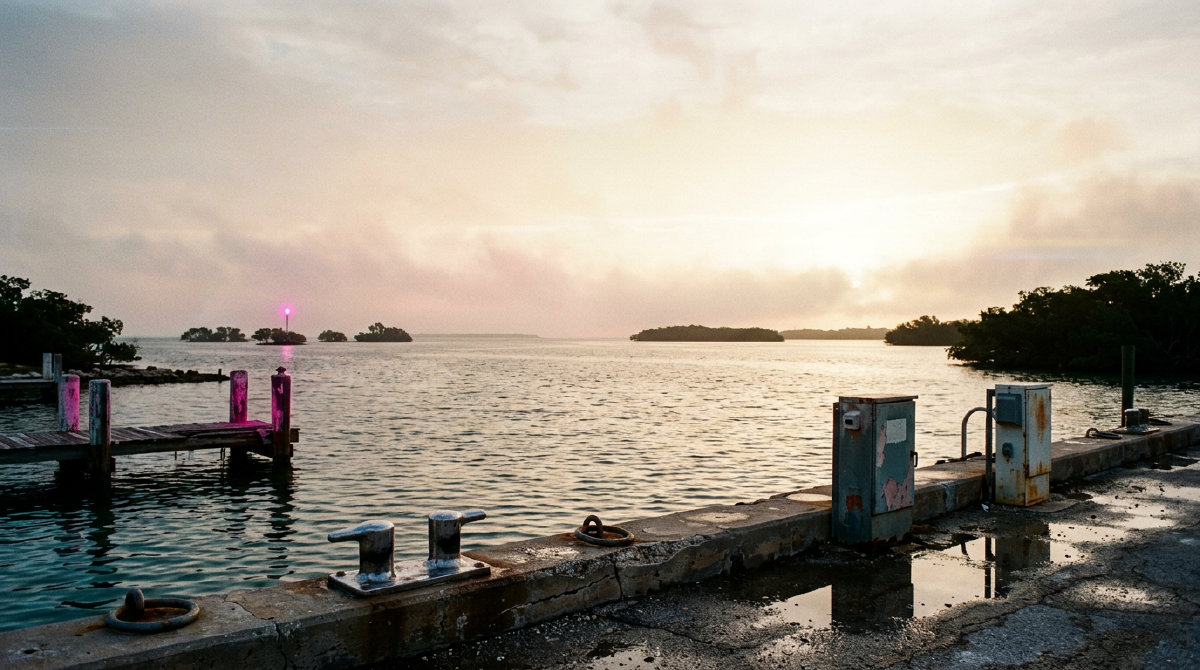
GTA VI makes Miami a two-way cultural map
Fans are looking for the real city in Leonida while Miami prepares for the attention generated by the game.
Redação G6 World
GTA VI is not merely using Miami as raw material: it is beginning to send attention, interpretations, and potential visitors back to the city that inspired Vice City. Read together, the comparisons made by fans, the technical construction of Leonida, and Miami-Dade's tourism expectations reveal a two-way cultural map. This is an interpretation of the available signals, not an intention declared by Rockstar.
The facts
The most literal example is the possible resemblance between a GTA VI building and the Bay Harbor Club, the Miami condominium used for exterior shots of Dexter Morgan's apartment. According to GameSpot, fans placed images of the two buildings side by side and focused on their external appearance. Rockstar has not confirmed an intentional reference, and nothing in the available material establishes a narrative connection to Dexter. Even so, the comparison shows how audiences are already using real places familiar from television to decode virtual Vice City.
Streamer Neon’s reaction adds a different layer to the same behavior. Following Rockstar's 26-minute gameplay presentation on Netflix, fans associated his features and haircut with a content creator shown in a side mission, as reported by IGN. Neon celebrated the possibility during a Kick stream the following day, but acknowledged that he had no confirmation of a collaboration or direct inspiration. In this case, the audience is not only looking for real architecture inside the game but also for faces, habits, and language drawn from contemporary online culture.
The geographical scale confirmed by Rockstar expands the space available for that kind of recognition. Leonida has six officially presented regions: Vice City, the Leonida Keys, Port Gellhorn, Grassrivers, Ambrosia, and Mount Kalaga. Ambrosia has been classified as inland territory, while the full group covers settings including a city, an archipelago, wetlands, a port area, and a national park. That suggests comparisons with the real world will not have to remain confined to Miami-style urban facades.
Digital Foundry’s technical analysis helps explain why these associations have found such fertile ground. Oliver Mackenzie and Richard Leadbetter highlighted character rendering, hair physics, skin detail, and selective ray tracing, according to GameSpot. The pair also estimated that the displayed gameplay maintained a 30 FPS target with few drops, although that is not an official Rockstar specification. The more convincing the visual presentation becomes, the more natural it is to inspect every building, object, or figure for a recognizable counterpart.
On the other side of that flow, NBC 6 South Florida reported that Miami-Dade is watching for a potential GTA VI-related tourism boom. The available source provided no projections, initiatives, or dates, and it did not identify whether the expectation came from local government, the tourism industry, or another organization. There is therefore no basis yet for estimating how many people might travel because of the game. The verifiable point is more modest but still meaningful: the real region is already considering whether its fictional representation could generate interest beyond the screen.
The strength of that interest is also visible in the schedules of other games. Fable was moved to February 23, 2027, leaving a late-2026 period that includes GTA VI's November 19 release. In an earlier statement made in June, Ralph Fulton told IGN that the move allowed Fable to escape a crowded period and “obviously” avoid Grand Theft Auto; in his more recent comments, he called the old window chaotic without naming GTA directly. This does not concern Miami itself, but it demonstrates the scale of attention that could fuel all these comparisons once Leonida becomes playable.
The reading
Together, these facts describe a three-stage cycle. First, Rockstar transforms geographical and cultural references into a fictional version of Leonida; fans then try to recognize buildings, influencers, and behaviors within that reconstruction. Finally, the attention created by the game returns to reality through coverage, commercial expectations, and potential tourism. None of the individual reports proves that cycle on its own, but the sequence they form is difficult to ignore.
It also changes what “fidelity” means in an open world. Fidelity does not have to mean that every building is an exact copy or that every resemblance is a planned tribute; it can mean that the overall setting feels specific enough to invite investigation. Leonida's six regions provide geographical variety, while the visual presentation supplies enough detail to sustain that scrutiny. GTA VI gains cultural depth when audiences believe its fiction is worth comparing with existing places and forms of communication.
The counterargument
The strongest argument against this reading is that its most eye-catching signals remain fragile. Rockstar has not confirmed that the building references Dexter, Neon has offered no evidence that he inspired the character, and the tourism report contained no numbers or concrete plans. Without those confirmations, part of the phenomenon may simply be pattern recognition applied to a game based on a city that has been extensively photographed and filmed. The game has not launched either, so we do not know whether today's curiosity will translate into travel or remain confined to social media.
What to watch
The clearest test will come from concrete action on both sides of the border between the game and reality. Rockstar confirmations about reference locations would strengthen the case for a deliberate cultural reconstruction, while campaigns, tourism routes, or visitor data from Miami-Dade would demonstrate movement in the opposite direction. After November 19, 2026, it will also be possible to see whether players systematically identify real counterparts across the six regions instead of producing only isolated comparisons. An absence of those signals would weaken the thesis and suggest that the pre-release conversation was larger than its impact outside the game.
Closing
For now, the most interesting question is not whether a condominium or an influencer was copied. It is that Leonida already works as a lens through which fans are looking again at Miami, television, and livestream culture. At the same time, Miami is beginning to look at GTA VI as a possible driver of real-world attention. If that movement survives launch, the game's most important map may be the continuing route between Vice City and the city that inspired it.
Related
GTA 6 could turn one launch into two peaks
The Twitch chief’s multiplayer forecast and the campaign linked to Spotify point to an important possibility: GTA 6 could occupy the calendar through two launch moments rather than one.
GTA preserves its past in two different ways
GTA: London 1961 returning to the headlines and ambitious GTA 5 mods reveal two different ways of keeping the series’ history in circulation.
GTA 6 Must Mark Where the Puzzle Ends
The collective search for clues is part of the anticipation for GTA 6, but artist posts, casting speculation, fabricated reviews, and drones show that not everything around the game is a puzzle piece offered to the public.