
IGN Revisits GTA San Andreas’ Legacy
The retrospective highlights the seamless map, activity density, and systems that made the game stand out in 2004.
Redação G6 World
IGN has revisited Grand Theft Auto: San Andreas as part of a series covering the core GTA games ahead of GTA 6. The project is not intended to deliver traditional re-reviews or assign new scores to the classics. Instead, it will reconsider what made every entry remarkable in its era and eventually place them on a scale inspired by GTA’s former six-star wanted level.
Returning to San Andreas
The retrospective presents San Andreas as one of the defining releases of 2004, a year that also included World of Warcraft, Half-Life 2, Halo 2, Burnout 3, Metal Gear Solid 3, and Gran Turismo 4. According to IGN, San Andreas emerged as that year’s bestselling game. The outlet argues that achieving this position in such a competitive period required GTA to be rich, surprising, innovative, and essential.
Its evolution is explained through the two previous 3D entries in the series. GTA III established key foundations for open-world design, while Vice City layered the formula with a strong 1980s identity. San Andreas arrived only two years after Vice City and expanded the concept to three major cities inside a fictional state set in 1992.
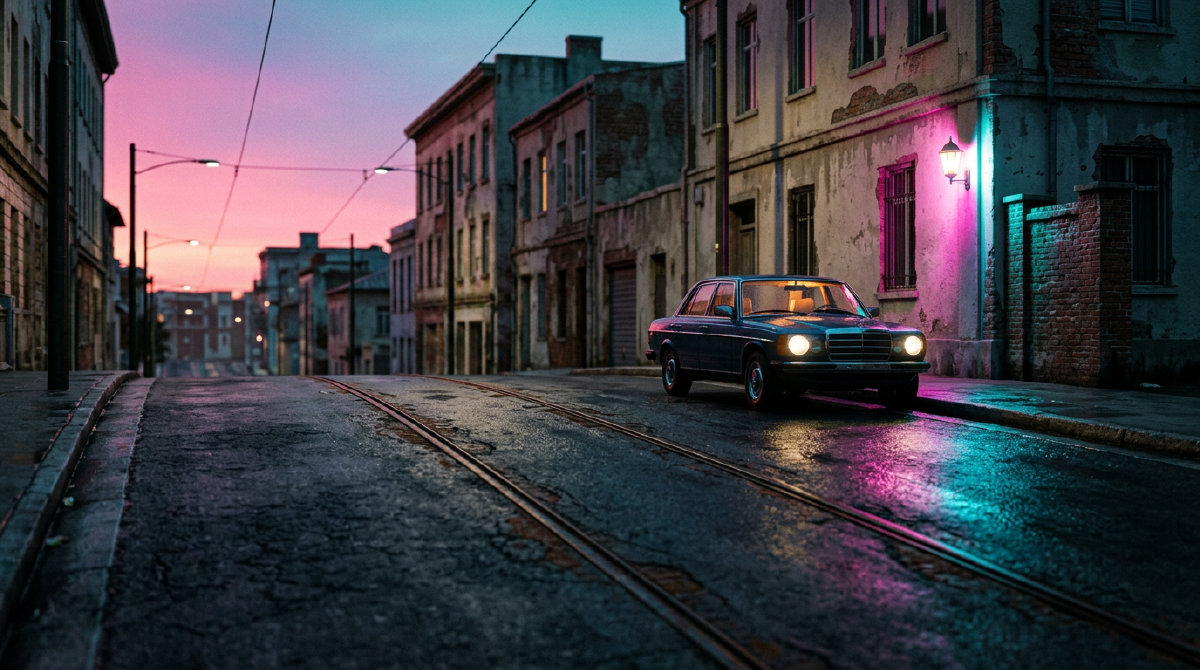
Los Santos, San Fierro, and Las Venturas received distinct visual identities rather than serving as minor variations of the same environment. Los Santos is covered in smog and an orange haze at certain times, with heat visibly shimmering above the asphalt. San Fierro combines steep hills, tramlines, and shaded high-rise areas, while Las Venturas is dry, flat, and especially defined by its lights at night.
IGN says the state of San Andreas covers an area roughly six times larger than Vice City. Its three metropolitan centers are connected by fields, redwood forests, and rocky desert, with small towns, farms, and factories positioned between them. That variety helped the map feel like a complete fictional state rather than one city surrounded by secondary spaces.
Scale Without Loading Screens
The most impressive technical advance, according to the retrospective, was the ability to travel across those regions without encountering a single loading screen. Vice City still briefly interrupted movement between its islands, but San Andreas continuously streamed the area immediately surrounding the player. It accomplished this on PlayStation 2 hardware with 32MB of RAM while constantly reading data from a dual-layer DVD.
The PS2 version accounted for more than 17 million of San Andreas’ 27.5 million sales, based on the figures cited by IGN. The system had to build the world ahead of the player even as fast vehicles, including a fighter jet, moved across the state. IGN considers this combination of scale and seamless streaming a particularly significant achievement for the hardware of the period.
The retrospective’s central conclusion, however, is that San Andreas’ greatest victory may not be its geographical size. IGN emphasizes the density of systems, ideas, and side activities distributed throughout the game. Despite spending a large amount of time with it in the mid-2000s, the author rediscovered modes during the latest playthrough that had slipped from memory over the previous two decades.
Those activities include valet work, trucking missions, and lowrider duels. The list also covers home invasions, dancing, arcade machines, gym sessions, casinos, triathlons, business management, parachuting, and pool. Their sheer number creates the impression that very few concepts were removed during development.
Vehicles and CJ’s Progression
San Andreas also contains around 200 vehicles, according to IGN, with its selection beginning with the bicycle introduced at the start of the campaign. Combine harvesters, quad bikes, articulated trucks, monster trucks, functional forklifts, and hovercraft are among the examples highlighted. The game even includes both a jump jet and a jetpack rather than forcing Rockstar to choose between those ideas.
This range of activities is supported by light RPG mechanics attached to Carl Johnson. In addition to outfits, haircuts, tattoos, and physical changes connected to eating, CJ has skills that improve through use. Flying, fighting, driving, diving, and weapon handling can all become more effective with practice.
IGN’s example is weapon progression up to the proficiency level called “Hitman.” At that level, CJ can move and strafe while firing, while his lock-on range is also extended. The mechanic turns repeated actions into character development and connects exploration, combat, and customization.
The retrospective also recalls the Hot Coffee controversy surrounding a sex minigame abandoned late in development. Because fully removing it risked disrupting the game’s interconnected code, the content remained locked beneath a non-interactive wrapper and was later re-enabled by modders for the 2005 PC version. The case prompted the US ESRB to reissue the game with an Adults Only rating and led to a temporary ban in Australia until the abandoned content was removed.
What It Means for Players
For anyone planning to return to San Andreas before GTA 6, the assessment suggests its value extends beyond exploring a map that was unusually large for 2004. The experience rests on the combination of distinct cities, seamless travel, vehicle variety, optional activities, and skill progression. IGN treats those elements as pieces of one broader achievement created within the technical limits of the PS2.
The retrospective does not provide a new score, a final position for San Andreas among the other GTA games, or new information about pricing, platforms, and technical updates. The approximate standing of each entry will only become clear at the end of the project based on its six-star scale. According to IGN, the legacy review is meant to explain why San Andreas mattered at release rather than replace its original verdict with a conventional new review.
Related
GTA 5 Mod Teleports Players Every 50 Seconds
PC Gamer tested a mod that sends the player to one of 28 GTA 5 locations every 50 seconds, making almost any plan impossible.
Xbox Says GTA 6 Preorders Match Its Market Share
Xbox says its share of GTA 6 preorders matches its share of the console market. Microsoft also says it is very happy with the results and expects more records throughout the fall.
GTA 6 Collectibles Box Costs £349
Rockstar has announced a limited GTA 6 collection priced at £349. The package does not include the game and features items that Eurogamer sees as a deliberate provocation.